How do we hire a Product Designer?
Choosing the right product designer can have a deep impact on your business's growth and success. Product design is not limited merely to creating an attractive appearance; this process includes understanding users' needs, analyzing digital interactions, and optimizing the overall user experience. A product designer must not only offer beautiful, functional designs, but also decide strategically how the product can be introduced to the market in a simple, user-friendly way. This role directly affects customer satisfaction, brand loyalty, and ultimately the business's growth.
The impact of high-quality product design can significantly affect businesses' progress. From increasing the conversion rate and improving the user experience to creating differentiation in saturated markets, the role of product designers in developing and improving products is undeniable. However, hiring a product designer with high technical skills, creativity, and the ability to work in a team is considered a major challenge for many HR managers and specialists.
In this article, we examine all aspects of attracting, assessing, and hiring a successful product designer. From understanding your business's needs and precisely defining the designer's role, to effective methods for finding and retaining the best talent, our goal is to provide a comprehensive guide for overcoming the challenges of hiring product designers and helping your business progress.
Understanding the product-design process from idea to change
In product design, empathy is the main element. Understanding users' needs, wants, and pain points allows designers to create products that truly respond to them. Without this deep understanding, design can easily turn into a set of incorrect assumptions. Designers must be in contact with users, hear their opinions, and learn from their experiences so they can create a product that is not only attractive but also functional and useful.
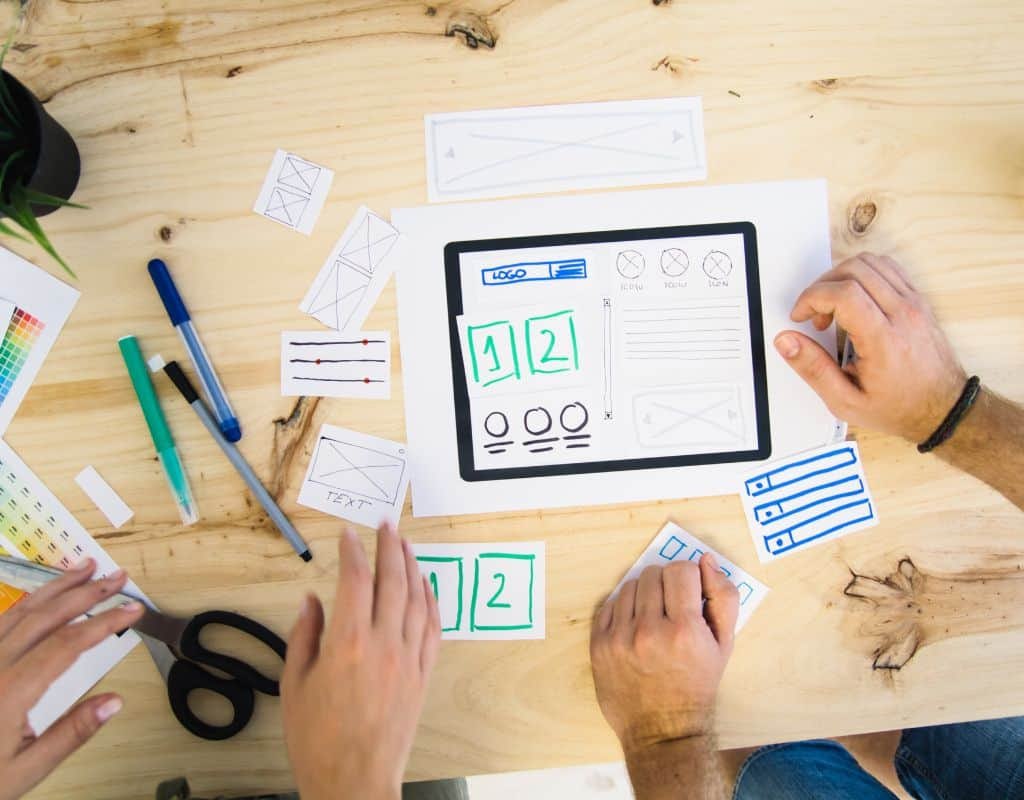
The product-design process usually includes specific stages that help designers turn ideas into reality. These stages include ideation, building a prototype, testing, and iterating. To hire a product designer, before anything it is good to become a little familiar with this process and its stages.
- Ideation: At this stage, designers raise various ideas and look for creative solutions to users' needs.
- Building a prototype: After choosing suitable ideas, designers create initial prototypes that are a representation of the final product.
- Testing: These prototypes are tested with real users to collect essential feedback.
- Iteration: Based on the feedback, designers improve the product, and this process continues until reaching the final product.
Understanding the business's needs and defining the product designer's role
Before entering the process of hiring a product designer, you must know your business's and projects' precise needs well. Knowing these needs helps you not only find the best candidate, but also reach a clear, correct definition of the job duties and expectations.
To determine your project's and company's precise needs, you must first answer key questions: What is the project's goal and what skills are needed to achieve it? Does the project need complex designs with particular interactions, or does it need more of a strong user-experience (UX) development? By answering these questions, you can determine whether you need a product designer with more of a focus on UI design or someone with more comprehensive, strategic thinking to align the product design with the business's needs.
The difference between a product designer, a UX/UI designer, and other roles
One of the common mistakes in the hiring process is a lack of precise awareness of the difference between roles in the design world. A product designer is someone who is involved from the start to the end of a product's development and, in addition to designing the appearance and user experience, addresses functional aspects, market analysis, and coordination with various teams. By contrast, a UX designer focuses more on improving the user experience, and a UI designer focuses more on the product's visual appearance. Knowing these differences precisely helps you have more realistic expectations and attract someone who creates the most value for your business.
How do we write a comprehensive, attractive job description?
Writing a comprehensive, attractive job description is the first step to capturing professional product designers' attention. An effective job description should include the following:
- A summary of the company's goals and values
- The job's key duties
- The required technical and soft skills
- The benefits and facilities the company offers
Also, using clear, direct language and avoiding vague terms can increase the job ad's attractiveness and guide more suitable candidates toward your company.
The essential skills and traits for a professional product designer
Hiring a successful product designer requires precisely identifying the skills and traits that distinguish them from other candidates. Professional product designers must have a combination of technical and soft skills and be able to create added value in every project.
Technical skills: from digital design tools to prototyping
Technical skills are one of the most important criteria for assessing a product designer. These skills include mastery of digital design tools such as Sketch, Figma, and Adobe XD, which are essential for designing user interfaces and prototyping. In addition, the ability to create interactive prototypes and test them to examine performance and the user experience is also highly important. Familiarity with the principles of interaction design and knowledge about user-research methods and usability tests can also elevate a product designer to a more professional level.
Soft skills: creativity, design thinking, and team collaboration
Product designers must not only have the ability to execute ideas, but must also be able to employ creative thinking and Design Thinking in their projects. Creativity is one of the key factors in creating innovative, different solutions. In addition, the ability to work in multidisciplinary teams and communicate effectively with other team members, including developers, project managers, and business analysts, is highly important. These soft skills enable the designer to present their ideas and suggestions correctly and create the necessary alignment on the project's path.
The competition to attract programming talent: how do you win the field?
Portfolio and quality-assessment criteria
One of the best ways to assess a product designer's quality and ability is examining their portfolio. A good portfolio should reflect the designer's thought process, from the early stages of ideation and research to the final implementation. Look for portfolios in which explanations about the project's challenges and how they were solved are provided. These examples show how the designer can blend users' needs and business goals and create a high-quality, user-friendly product.
Strategies for attracting and reaching the best product designers
Attracting the best product designers requires employing creative, purposeful strategies that help you perform more successfully in today's competitive market. In this section, we address methods that can increase your chance of finding and hiring the best talent.
Using professional social networks and job platforms
One of the most effective methods for attracting product designers is an active presence on professional social networks such as LinkedIn. Update your company's profile and share content related to the work culture and attractive projects to capture professional designers' attention. Also, using specialized job platforms such as Dribbble and Behance can help you find designers who have strong portfolios and relevant experience.
Collaborating with specialized recruitment agencies and design groups
Recruitment agencies specialized in the area of product design can, with the extensive network of experienced designers they have, facilitate your hiring process. These agencies can introduce candidates who match your precise needs. Also, connecting with design groups and communities on various platforms can help establish communication with creative designers.
Modern techniques for attracting talent
To stand out from competitors and attract the best product designers, you should use modern techniques. According to your organization's need and capacity, you can use various techniques to attract talent: holding design events, challenge competitions for product designers, and setting a prize for presenting the best ideas related to product design can be an opportunity to identify and attract talented designers. Also, offering flexible work conditions, competitive benefits, and the possibility of remote work can create more attractiveness for experienced candidates. Attention to the candidate's experience throughout the hiring process, from the first contact to the interviews, makes your company recognized as a popular employer.
Common challenges in the hiring process and methods for addressing them
Hiring high-quality product designers, especially in a market where competition to attract talent is intense, can be challenging. In this section, we address some of the common challenges in the process of hiring product designers and methods for addressing them.
Problems finding suitable candidates in a competitive market
One of the main challenges in the hiring process is the limited number of qualified candidates in today's competitive market. High demand and the limited number of experienced designers make companies compete to attract top talent. To deal with this challenge, companies should turn to using diverse, creative strategies such as offering competitive benefits, professional-growth opportunities, and the possibility of remote work. An active presence in design groups and establishing effective communication with designers through professional networks can also help attract candidates faster.
Common mistakes in interviewing and assessment
Another hiring challenge is the common mistakes in the process of interviewing and assessing candidates. A sole focus on technical skills without considering soft abilities such as teamwork, problem-solving, and critical thinking can lead to a wrong choice. In addition, using general, irrelevant questions in the interview instead of specialized, practical questions can cause a lack of clarity in measuring the candidate's skills. To address this problem, it is better that interviews be designed so that candidates can provide practical examples of their projects and experiences and showcase their creative and strategic skills.
Effective methods for examining creativity and practical abilities
To assess creativity and practical abilities, conducting design tests and examining challenges related to real projects is very effective. These methods help you measure not only technical skills, but also candidates' design-thinking approach and problem-solving ability. You can ask them to build prototypes or improve designs based on a specific scenario. A precise assessment of these matters provides a deeper view of candidates' creative and practical abilities and helps you make the best choice.
Key tips for interviewing and assessing candidates
Interviewing and assessing candidates is one of the most important stages in the process of hiring a product designer. In this section, we address key tips for conducting a suitable interview and assessment to ensure that the candidate is suitable for your team not only technically but also culturally.
Interview questions for assessing design thinking and problem-solving
One of the main goals of interviewing product designers is measuring their ability in design thinking and problem-solving. For this, you can ask questions that prompt them to explain the stages of solving a design challenge. Some sample questions include the following:
- "Can you talk about a project in which you faced a big challenge and how you solved it?"
- "When facing different feedback from various teams, how do you create balance and reach a shared solution?"
Candidates' answers to these questions show how they face complex problems and what strategies they use to offer creative, effective solutions.
Examining cultural fit and compatibility with the team
Cultural fit and compatibility with the team are key factors in a product designer's success. In the interview, raise questions that help you understand how the candidate copes with various work environments and how much they participate in teamwork. Questions such as:
- "How do you maintain collaboration and empathy in conditions where there are different opinions in the team?"
- "What features of a work culture make you feel more comfortable and productive?"
These questions help you assess the candidate's degree of flexibility and ability to adapt to your current team.
How to conduct a practical test to assess real skills
Practical tests are one of the best ways to assess candidates' real skills. These tests should be designed so that they show not only technical skills but also their overall approach to projects. You can ask candidates to design a prototype for a particular scenario or examine part of real projects and present their ideas for improving it. These tests should include challenging elements so that candidates' problem-solving ability, creativity, and attention to detail become apparent.
A precise assessment of candidates' practical skills and creative approaches at this stage of the interview helps you ensure that you are hiring someone who not only has the technical knowledge needed, but is also well-suited to your cultural needs and team environment.
Hiring a product designer who is transformative
Hiring a professional product designer can have a deep impact on your business's success and growth. Product designers, by combining technical and soft skills, can create attractive, effective user experiences that help your brand grow and strengthen. In this article, we examined key tips that can improve your hiring process; from understanding the business's needs and precisely defining the role to assessing technical skills and examining cultural fit.
By employing suitable strategies for attraction, precisely assessing candidates' abilities and creativity, and creating favorable work conditions, you can attract the best product designers to your team and use their abilities for innovation and advancing projects.
At HR Bamboos, with a skilled team of HR specialists, we are beside you so that, throughout the process of attracting talent to your team, you implement these solutions at the various stages of hiring and create a better experience for your company and team. By optimizing the attraction and hiring process, you will see positive results not only in the short term but also in the long term that guide your business toward success. Get in touch with us right now.
Stay tuned and follow us on our social media!